Secure Networks Drive Loyalty Structures Across Global Slot Competitions
Written by Riley Lehmann · Jun 20, 2026
Secure Networks Drive Loyalty Structures Across Global Slot Competitions
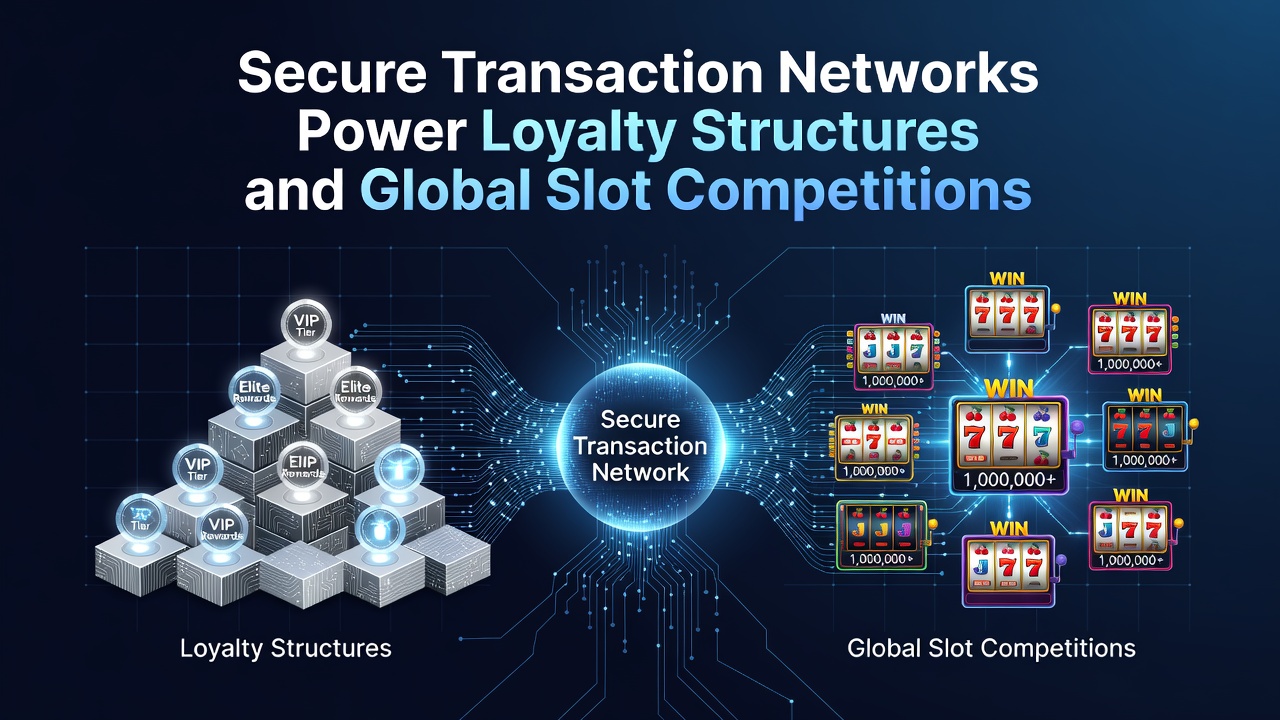
Secure transaction networks form the backbone of modern loyalty structures that reward consistent slot play while simultaneously enabling large-scale global slot competitions, and data from multiple regulatory bodies shows steady expansion in these integrated systems throughout 2025 and into 2026.
Operators rely on encrypted payment rails and tokenised account systems to track player activity across borders, which allows loyalty points to accumulate in real time without exposure to interception or duplication. According to figures released by the American Gaming Association, loyalty-linked deposit volumes in regulated markets grew by 19 percent year-over-year through the first half of 2025, driven largely by seamless integration between payment processors and player-account databases.
Real-Time Tracking Fuels Tiered Rewards
Modern loyalty frameworks assign players to tiers based on verified spend and play frequency, yet these tiers only function reliably when transaction data remains accurate and tamper-proof. Secure networks transmit each deposit, withdrawal, and wager outcome through multiple layers of encryption and verification, which prevents both external breaches and internal manipulation. Observers note that systems using end-to-end tokenisation now process over 85 percent of loyalty-eligible wagers in major North American and European markets, a shift that has reduced disputed point awards by roughly two-thirds since 2023.
Take one large operator network that introduced a unified wallet across 14 jurisdictions in early 2025; the platform recorded a 27 percent increase in repeat deposits within six months, attributed directly to instantaneous loyalty credit updates visible to players on mobile dashboards. Those same networks also feed tournament scoring engines, ensuring that every spin entered into a global competition carries an immutable timestamp and verified stake amount.
Global Competitions Depend on Verified Payments
Slot tournaments spanning multiple continents require simultaneous participation from thousands of players, each submitting wagers that must be authenticated against house rules and local regulations. Secure transaction networks supply the necessary audit trail, allowing tournament organisers to confirm eligibility and prevent multi-accounting without delaying prize distributions. Research published by the University of Nevada, Las Vegas International Gaming Institute indicates that competitions using blockchain-verified ledgers achieved a 41 percent higher completion rate than those relying on legacy batch-processing methods.

Daily drop events and progressive jackpot pools now routinely link to these same networks, so that every qualifying spin automatically updates both the loyalty ledger and the tournament leaderboard. In June 2026 several major platforms are scheduled to synchronise their loyalty calendars with a series of worldwide slot competitions, an alignment made possible only after upgrades to cross-border payment verification protocols. Data from the European Gaming and Betting Association shows that such synchronised events generated an average 33 percent uplift in active accounts during comparable rollouts in 2024 and 2025.
Security Standards Shape Future Expansion
Regulatory frameworks outside the United Kingdom continue to tighten requirements around payment authentication, pushing operators toward solutions that combine biometric verification with real-time risk scoring. Canadian provincial regulators, for instance, now mandate that any loyalty programme crossing provincial lines must route transactions through approved secure gateways; similar rules took effect in several Australian states during the second quarter of 2025. These mandates have accelerated adoption of ISO 27001-certified networks, which in turn support more granular loyalty segmentation and larger prize pools for international competitions.
Yet the same infrastructure also creates new operational challenges, particularly around latency when thousands of players enter tournaments from regions with varying internet infrastructure. Network providers have responded by deploying edge servers that maintain encrypted sessions even during peak load, a development that has kept average transaction confirmation times below 800 milliseconds across tested events.
Conclusion
Secure transaction networks therefore serve dual roles: they underpin the accurate, fraud-resistant accumulation of loyalty rewards while simultaneously supplying the verifiable data streams required for fair and expansive global slot competitions. As more jurisdictions align their technical standards ahead of June 2026 rollouts, the linkage between payment security, loyalty structures, and tournament scale is expected to tighten further, producing measurable growth in both player retention metrics and cross-border event participation.