Payment Systems Bridge Progressive Jackpots with Tournament Entries and Loyalty Tiers
Written by Wendy Albrecht · Jun 11, 2026
Payment Systems Bridge Progressive Jackpots with Tournament Entries and Loyalty Tiers
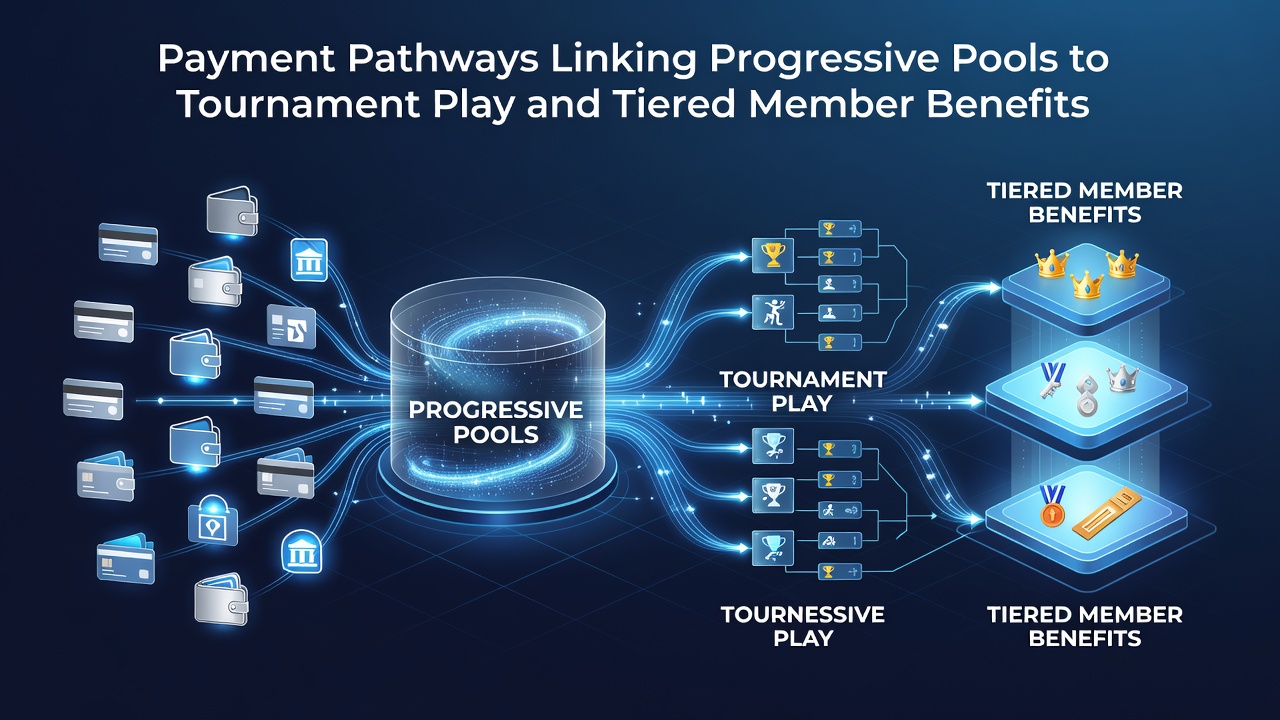
Payment pathways serve as the connective tissue between progressive jackpot pools, tournament structures, and tiered membership programs across casino platforms, allowing funds to move in coordinated sequences that support continuous play cycles. Operators configure these systems so contributions from regular spins feed directly into growing prize pools while simultaneously crediting player accounts for tournament qualification and loyalty advancement, creating seamless transitions that keep balances active without separate manual transfers.
Mechanics of Progressive Pool Integration
Progressive pools accumulate through fixed percentages of each wager, and payment gateways route those increments into centralized ledgers that update in real time across multiple sites. When a tournament begins, entry fees often draw from the same pooled resources or trigger parallel contributions that boost the main jackpot, linking daily tournament activity to the overarching progressive total. Data from regulatory filings in various jurisdictions shows these automated transfers occur within milliseconds, ensuring the displayed jackpot figure reflects every eligible spin without delay.
Operators use API connections between payment processors and game servers to tag each transaction with metadata that identifies whether it qualifies for progressive growth, tournament scoring, or tier progression. This tagging allows a single deposit to split automatically: part funds the progressive pool, another portion registers the player in an upcoming event, and the remainder accumulates loyalty points that unlock higher membership levels. Observers note that such configurations reduce transaction friction while maintaining audit trails required by oversight bodies.
Tournament Play and Direct Payment Links
Tournaments frequently incorporate buy-in options funded through the same wallets that support progressive contributions, so players move from standard play into competitive rounds without exiting the payment ecosystem. Prize distributions at tournament conclusion flow back through these pathways, with winning amounts sometimes added directly to progressive meters if the event rules specify such reinvestment. Figures from industry reports indicate that integrated systems handle thousands of simultaneous tournament entries daily, each tied to the same progressive infrastructure that drives headline jackpots.
Case Example from North American Markets
One documented implementation in regulated US state markets routes tournament registration fees through processors that also manage progressive contributions, resulting in combined growth metrics published quarterly by state gaming authorities. Players who reach certain loyalty thresholds receive reduced entry costs or bonus credits that count toward both tournament leaderboards and progressive qualifiers, illustrating the layered benefit structure. Similar patterns appear in Canadian provincial systems where payment logs demonstrate synchronized updates between pool sizes and membership tiers.
Tiered Member Benefits and Payment Prioritization
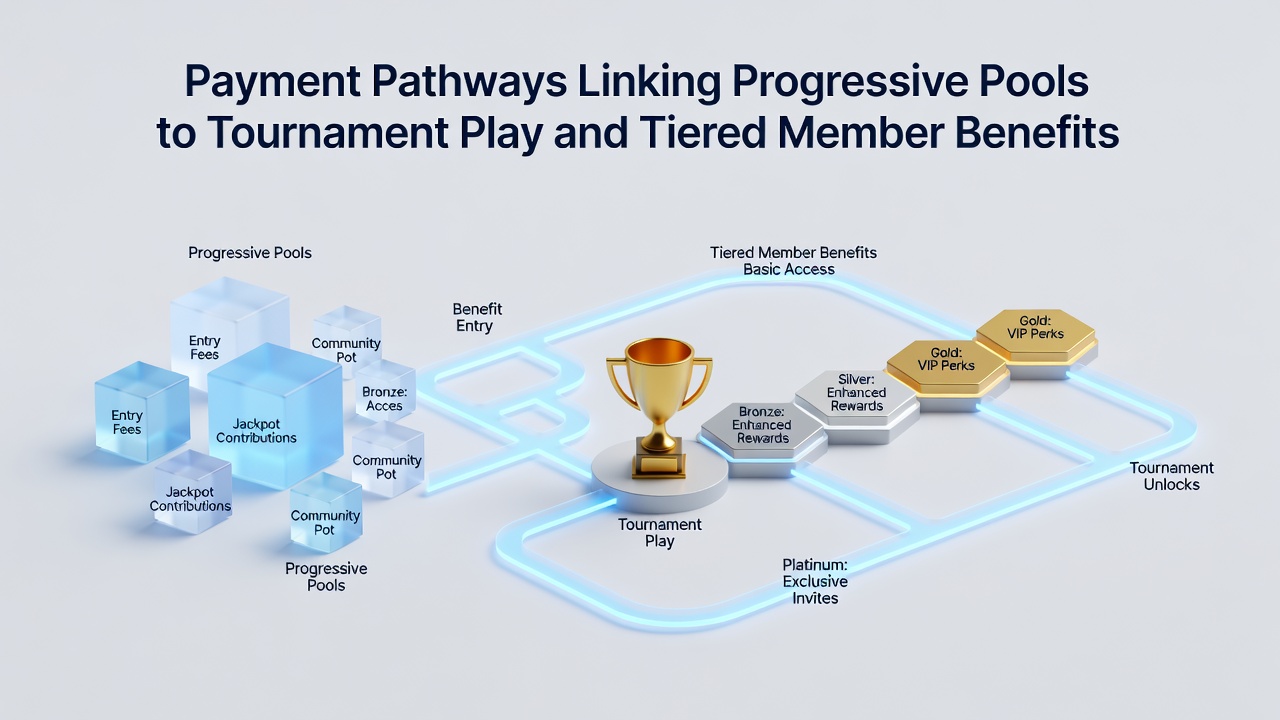
Loyalty programs assign payment processing advantages based on tier status, granting faster settlement speeds or waived fees for players who maintain consistent activity linked to progressive and tournament participation. Higher tiers often unlock direct access to pooled funds through accelerated withdrawal channels or exclusive tournament brackets where entry payments convert instantly into additional progressive shares. Research compiled by academic groups tracking gambling economics shows these tier-linked pathways correlate with higher retention rates because players experience tangible returns on accumulated play volume.
Payment gateways apply rule sets that recognize tier status at the point of transaction, automatically routing eligible players into benefit streams such as cashback percentages applied against progressive contributions or priority tournament seeding. This automation ensures that movement between standard play, competitive events, and reward redemption occurs within unified account ledgers rather than across disconnected systems. External monitoring from bodies like the American Gaming Association tracks how these configurations influence overall transaction volumes across licensed operators.
Regulatory Context in June 2026
By June 2026 several international frameworks had updated technical standards governing payment routing for combined gaming features, requiring clearer separation of progressive contributions from tournament prize pools while still permitting linked accounting. European regulators outside the UK implemented verification protocols that confirm each payment segment meets distinct compliance criteria before release, yet the underlying pathways remain intact to support player continuity. Australian oversight bodies released updated guidelines emphasizing transparent reporting of how tier benefits intersect with jackpot growth, prompting operators to refine their ledger structures accordingly.
These updates did not dismantle existing connections but instead mandated enhanced logging so that every transfer between progressive pools, tournament entries, and loyalty redemptions carries traceable identifiers. Industry associations such as the Responsible Gambling Council have published summaries of how operators adapted systems to meet the new specifications without interrupting service flows.
Conclusion
Payment pathways that connect progressive pools to tournament play and tiered member benefits rely on integrated transaction systems capable of handling simultaneous allocations across multiple categories. These configurations support real-time updates to jackpot totals, tournament standings, and loyalty balances while satisfying reporting requirements from diverse regulatory environments. As platforms continue to refine routing logic, the core function remains consistent: enabling fluid movement of funds that sustains player engagement across linked features.